



The second quarter of 2025 proved to be a pivotal period for the global economy, marked by the return of significant policy uncertainty and renewed geopolitical tensions. While inflation showed encouraging signs of moderation and central banks continued to ease monetary policy, investors grappled with the implications of sweeping US tariffs reintroduced in April, alongside escalating conflict between Israel and Iran. These developments injected fresh volatility into markets and raised important questions about growth prospects both globally and within South Africa.
Global Growth and Inflation: A Fragile Recovery
After a relatively solid start to the year, global growth momentum softened through the second quarter. Heightened trade uncertainty, tighter financial conditions in some regions, and renewed geopolitical risks weighed on investment and consumer sentiment. The US economy, showed signs of cooling as businesses adopted a more cautious stance in response to policy unpredictability.
Elsewhere, economic activity remained mixed. In Europe, growth has been slow but steady, supported by falling inflation, a resilient labour market, and gradual wage recovery. Export demand remains subdued in the face of weaker global trade volumes, but prospects are expected to improve over the coming year. While challenges persist from geopolitical tensions to structural competitiveness ongoing reform efforts and increased public investment continue to offer support to the region’s medium-term outlook.
In Asia, China’s recovery showed signs of strain. While stimulus efforts are starting to support domestic demand evidenced by improvements in purchasing activity and infrastructure spending manufacturing remains under pressure and business confidence is fragile. Trade frictions and persistent property sector weakness continue to weigh on momentum, and growth is expected to remain uneven over the second half of the year.
On a more constructive note, inflation continued to trend lower across major developed markets. Headline rates have broadly moderated into the 3–4% range however, core inflation particularly in services remains elevated, prompting a cautious stance from policymakers. Most central banks, including the Federal Reserve, European Central Bank, and Bank of England, have begun cutting interest rates in response to improving inflation dynamics, though the path forward is expected to remain gradual and data-dependent.
Liberation Day Tariffs: A Return to Protectionism
One of the quarter’s most consequential events came on 2 April, now dubbed “Liberation Day”, when the Trump administration reimposed a 10% tariff on nearly all US imports and introduced higher levies on selected trading partners. The announcement triggered an immediate selloff in equity markets, sending the S&P 500 into technical bear market territory within days.
However, as the administration quickly scaled back or paused several components of the tariff package, sentiment shifted dramatically. Risk assets rebounded, and equity markets rallied into quarter-end, fuelled by strong earnings, resilient consumer data, and investor relief at a softer tariff landing, at least for now.
The policy shift, however, has permanently altered trade expectations, disrupting global supply chains and increasing business uncertainty. Slowing global trade volumes are likely to persist into 2026, particularly in manufacturing and export-dependent economies.
Geopolitical Risks: Escalation in the Middle East
June saw a sharp intensification in Middle Eastern tensions, as Israel and Iran engaged in direct strikes, including attacks on nuclear and military infrastructure. While a fragile ceasefire was eventually brokered, the episode significantly raised the risk premium across energy and commodities markets.
Oil prices spiked briefly above US$75 per barrel, before retracing toward quarter-end as the immediate risk of a broader conflict faded. Still, the situation highlighted how fragile energy supply routes remain and underscored the role of geopolitics in shaping inflation expectations.
South Africa: Resilience Amid Global Strain
South Africa weathered the second quarter with a degree of macroeconomic stability, though underlying challenges persisted. The rand ended June modestly firmer at around R17.70 to the US dollar, aided by softer US dollar dynamics and a generally supportive inflation backdrop. Domestic inflation eased to 2.8% in May comfortably within the SARB’s target band prompting the central bank to lower the repo rate by 25 basis points in May to 7.25%, its second cut in 2025.
However, growth remained weak. First-quarter GDP expanded by just 0.1% quarter-on-quarter, weighed down by softness in manufacturing and mining. While agricultural output and improved electricity availability offered some support, overall momentum remained fragile.
Business confidence softened further in the second quarter, dragged lower by ongoing policy uncertainty, infrastructure bottlenecks, and subdued external demand. Global trade tensions and slowing manufacturing activity abroad added to the pressure, reflecting South Africa’s continued exposure to global volatility.
On the fiscal front, the reversal of a proposed VAT hike provided some consumer relief, though longer-term budgetary pressures remain a concern.
While the near-term growth outlook remains muted, the combination of anchored inflation, improved energy supply, and a more accommodative policy stance provides a cautiously constructive base as the country moves into the second half of the year.
Looking Ahead: Signs of Strength Amid the Noise
As we head into the second half of 2025, the macroeconomic environment remains unusually complex. Investors continue to navigate the cross-currents of protectionist trade policies, heightened geopolitical risk, and uneven global growth. Yet, in the midst of this uncertainty, markets have delivered a notable signal worth paying attention to.
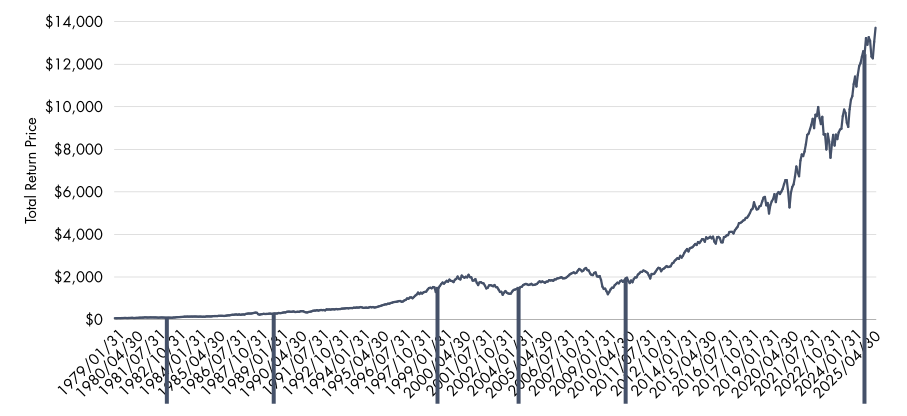
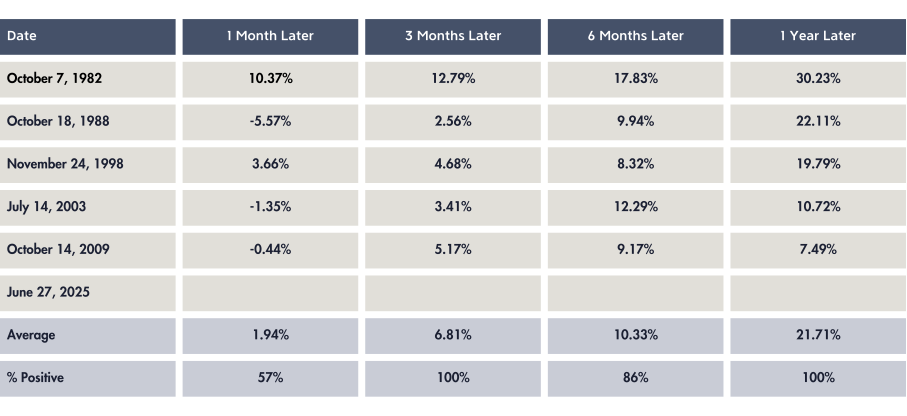
Following the sharp drawdown in April triggered by the surprise reintroduction of broad-based US tariffs the S&P 500 staged an aggressive and historically significant rebound. By late June, the index had not only recovered its losses but pushed to new all-time highs, doing so within just three months of an 18% decline. This kind of rapid turnaround is rare. Historically, when equity markets recover to a 12-month high within a quarter of a major drawdown, it has often marked a meaningful inflection point (see graph and table below).
The shaded bars in the graph highlight five previous instances since 1950 where similarly sharp declines were followed by equally swift recoveries. As shown in the table beneath, each of these cases was followed by strong forward returns. On average, the S&P 500 delivered 12-month gains in excess of 20%, underscoring the momentum that tends to build once key technical and psychological thresholds are surpassed.
Source: Lipper. Data as 30 June 2025.
Adding to the evidence, the index also recorded a cumulative two-month return exceeding 20% another statistically rare event. Since 1950, each prior occurrence of such a move has been followed by decisively positive 12-month returns, averaging over 30%. These types of rallies are typically associated with either early-stage recoveries or powerful momentum phases, both of which often lead to renewed investor participation and broader market strength.
While we remain fully cognisant of ongoing macroeconomic risks whether from tariff-related uncertainty, renewed conflict in the Middle East, or persistent core inflation, market history reminds us that strong price action can be a leading indicator, not merely a lagging response to good news.
From Bellamont’s perspective, this reinforces a core belief: the value of staying invested, staying selective, and maintaining a long-term focus. Even in an environment marked by heightened uncertainty, discipline and perspective remain the investor’s most effective allies.
FIXED INCOME COMMENTARY
Fixed income markets delivered solid performance over the quarter, with credit markets proving particularly resilient in the face of elevated geopolitical tensions and shifting policy signals.

Source: Lipper. Data as at 30 June 2025.
Investment grade spreads, which widened meaningfully following the initial announcement of broad-based US tariffs, recovered steadily as recession fears eased and risk appetite returned. By quarter-end, spreads had retraced to levels below where they began. High yield credit outperformed its investment grade counterparts, supported by strong technicals, elevated all-in yields, and improving sentiment albeit with greater volatility.
Across major economies, yield curves steepened as investors began to focus more intently on fiscal dynamics and long-term debt sustainability. While most central banks have entered the rate-cutting phase, the trajectory from here remains uncertain and increasingly dependent on incoming data and evolving inflation trends.
Despite these crosscurrents, bond markets absorbed higher issuance and policy uncertainty with composure. A weaker US dollar and relatively stable global rate environment also supported performance in select emerging market debt.
EQUITY MARKET COMMENTARY
Global equity markets delivered a strong rebound in the second quarter, with broad-based gains across most major indices. 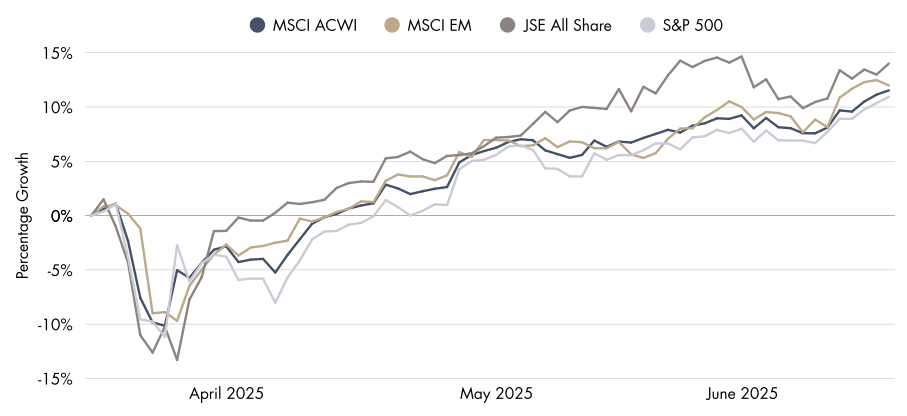
Source: Lipper. Data as 30 June 2025.
Following the sharp selloff in April linked to tariff fears, markets recovered swiftly as policy uncertainty subsided and investor sentiment improved. The rally was led by sectors tied to innovation and consumer resilience, with technology, communications, and discretionary names showing notable strength.
While US equities posted impressive returns, several international markets continued to outperform, building on momentum from the first quarter. Stronger relative valuations, improved currency dynamics, and more accommodative policy settings contributed to favourable conditions across parts of Europe, Japan, and Canada. In contrast, Chinese equities lagged, weighed down by uneven domestic demand, ongoing property market weakness, and renewed global trade pressures.
REAL ESTATE MARKET COMMENTARY
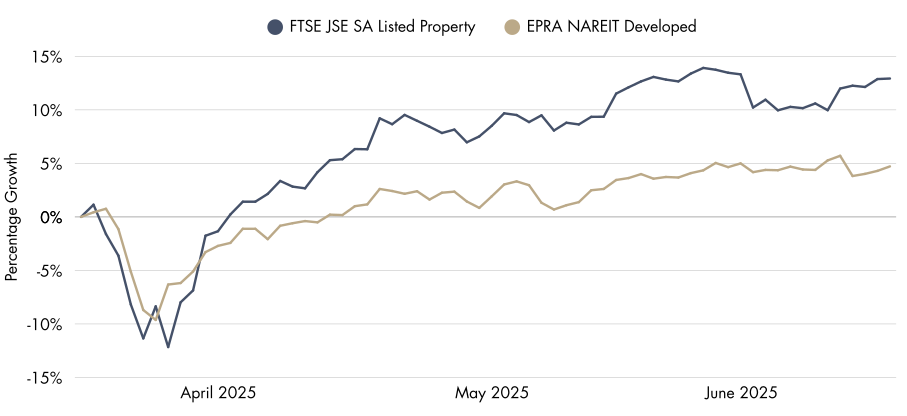
Listed property posted a solid performance in the second quarter, as falling inflation, stabilising interest rates, and growing demand for yield-supported strategies underpinned both local and global markets.
Source: Lipper. Data as at 30 June 2025.
In South Africa, the sector continued to build on the strong momentum of 2024, albeit at a more moderate pace. Earnings expectations have improved, with property companies guiding for modest growth this year, supported by healthier balance sheets and lower loan-to-value ratios. Encouragingly, the office segment has begun to recover, while the retail and industrial sectors remain resilient. Although merger and acquisition activity has slowed from last year’s elevated levels, the rising inclusion of listed property in multi-asset funds has driven fresh capital into the space. Attractive yields, political stability, and a more accommodative interest rate environment have helped restore confidence and sustained investor interest in the asset class.
Globally, listed property also made gains, benefitting from early-stage rate cuts and improved sentiment following a turbulent start to the quarter. Investors favoured higher-quality sectors such as data centres and healthcare, while some of the more structurally challenged areas like office and lodging began to stabilise. Real assets also continued to demonstrate diversification benefits, with recent correlations showing a closer relationship to fixed income than equities supporting their role in balanced portfolios.
With inflation well contained and rates gradually easing, the outlook for listed property remains constructive, particularly for investors seeking steady income, diversification, and long-term real return potential.
CONCLUSION
As we reflect on the second quarter of 2025, it’s clear that the investment landscape remains shaped by complexity, rapid shifts in trade policy, geopolitical risks, uneven growth, and cautious central banks. And yet, through it all, markets reminded us of their remarkable capacity for resilience.
At Bellamont, we continue to believe that long-term success is less about reacting to every headline, and more about positioning portfolios to endure and thrive across cycles. We remain committed to selectivity, diversification, and a disciplined focus on quality and value creation.
To frame this mindset, we turn to a quote from British novelist and philosopher G.K. Chesterton:
“An adventure is only an inconvenience rightly considered. An inconvenience is only an adventure wrongly considered.”
So it is with investing. Periods of discomfort be it market drawdowns, policy surprises, or geopolitical uncertainty can feel inconvenient. But for those with discipline and perspective, they are often the starting point of something meaningful: stronger returns, deeper resilience, and better long-term outcomes.
We thank you for your continued trust and partnership. As always, our team remains focused on safeguarding and growing your capital.
GLOSSARY & DISCLOSURES
Equity
United States – Is represented by the S&P 500 which is an equity market index that measures the share price performance of the 500 largest companies in the United States. South Africa – Is represented by the JSE All Share – The All Share Index represents 99% of the value of all eligible securities listed on the Main Board of the Johannesburg Stock Exchange. Aims to represent the performance of the South African equity market. All Countries – Is represented by the MSCI All Country World Index – Captures large and mid cap representation across 23 Developed Markets and 24 Emerging Markets countries. With 2,920 constituents, the index covers approximately 85% of the global investable equity opportunity set. Emerging Markets – Is represented by the MSCI Emerging Markets Index – Captures large and mid cap representation across 24 Emerging Markets countries. With 1,440 constituents, the index covers approximately 85% of the free float-adjusted market capitalization in each country. Developed Markets – Is represented by the MSCI World Index – The MSCI World Index captures large and mid-cap representation across 23 Developed Markets (DM) countries. With 1,395 constituents, the index covers approximately 85% of the free float-adjusted market capitalization in each country.
Fixed Income
Global Aggregate – Represented by the Bloomberg Global Aggregate Index which measures the performance of global investment grade debt from twenty-eight local currency markets. This multi-currency benchmark includes treasury, government-related, corporate and securitized fixed-rate bonds from both developed and emerging markets issuers. Global Treasury – Represented by the Bloomberg Global Aggregate Index which measures fixed-rate, local currency government debt of investment grade countries, including both developed and emerging markets. The index represents the treasury sector of the Global Aggregate Index. Global High Yield – Represented by the Bloomberg Global High Yield Index measures the performance of the global high yield debt market.
Real Estate
Local – Represented by the JSE All Property Index which measures the performance of the South African listed property sector. Global – represented by the FTSE EPRA/NAREIT Developed Index which measures the performance of eligible real estate equities worldwide.
All returns are cumulative and measured in United State Dollars. Information in this document regarding market or economic trends, or the factors influencing historical or future performance, reflects the opinions of management as of the date of this document. These statements should not be relied upon for any other purpose. Past performance is no guarantee of future results, and there is no guarantee that the market forecasts discussed will be realised.
