



We are excited to share our Investment Review for the third quarter of 2024, a period marked by strong performance across various asset classes. Our clients were strategically positioned to capitalise on the evolving market dynamics, resulting in rewarding outcomes. This review offers an overview of the key developments in the market and the performance of major asset classes.
As we progress through the year, we encourage you to reach out with any questions or insights you may have. Your engagement is invaluable to us and reinforces our commitment to delivering exceptional service tailored to your needs.
At Bellamont, we remain steadfast in our mission to provide personalised investment management and comprehensive financial planning. We strive to ensure that our strategies align seamlessly with your unique objectives and aspirations, paving the way for your financial success.
“Excellence is not a skill, it’s an attitude.” – Ralph Marston.
EQUITY REVIEW
The last quarter was marked by turbulence in global equities, as market focus shifted from inflation to the broader question of how well economies could handle persistently high interest rates. This shift led to sharp market reactions to economic data, with significant volatility as markets swung dramatically in response to any deviation from expectations. Despite the heightened uncertainty, the quarter delivered positive returns for investors, with the All Countries World Index (ACWI) rising nearly 6%. Much of this gain was driven by the resilience of economies amid elevated rates, a continued decline in inflation, and strong corporate performance—78% of companies in the S&P 500 surpassed consensus earnings estimates, with aggregate earnings beating expectations by around 2%.
South Africa emerged as a standout performer, benefiting from a weaker US dollar, which followed a 50 basis point interest rate cut by the Federal Reserve. Additionally, a surge in Chinese equities—spurred by government stimulus measures—created a ripple effect, further boosting South African markets, which are closely linked to Chinese growth.
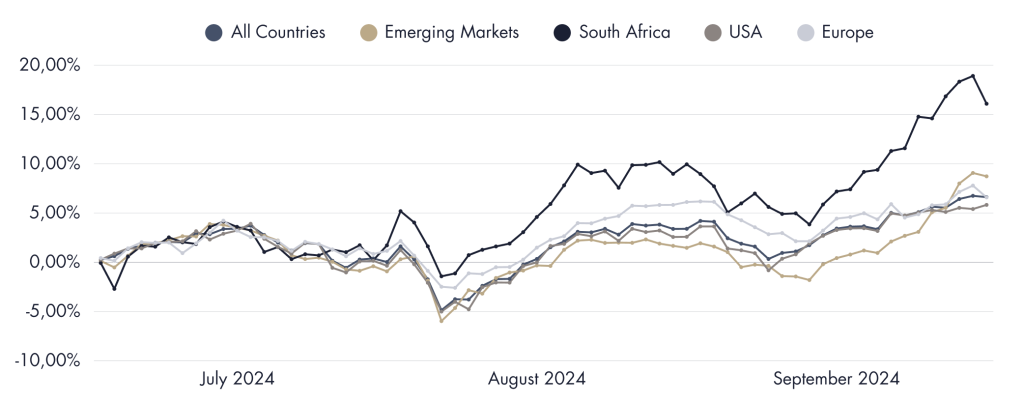
Source: MSCI. Data as at 30 September 2024.
SHIFTING DYNAMICS: EQUITY MARKET DEVELOPMENTS
Over the past quarter, equity markets have experienced notable shifts, largely driven by changes in global monetary policy. With interest rates beginning to ease (refer to graph below) after a period of aggressive hikes, investors have rotated their portfolios to take advantage of the sectors likely to benefit most from this policy shift. The economic data indicates that, despite the pressures of higher interest rates, many economies have remained resilient. This strength can be attributed to the fact that the recent inflation spike was supply-driven rather than demand-induced. As a result, economies have not exhibited the classic signs of overheating that often accompany periods of high inflation. Instead, underlying fundamentals remain solid, paving the way for potential growth as interest rates fall.
NET NO. CENTRAL BANKS (RATE CUTS – HIKES)
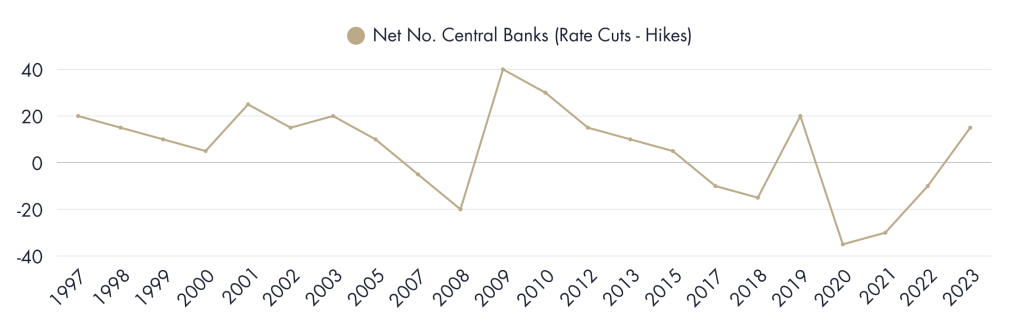
Source: FRED. Data as at 30 September 2024.
One of the most exciting developments has been the resurgence of small-cap stocks. Historically, small-caps tend to be more sensitive to interest rate movements, and their relative underperformance in recent years reflected the challenges of a restrictive monetary environment. However, as central banks have begun easing, small-caps are once again gaining favour among investors. This shift is particularly evident in our research piece titled, “The Road for Small-Caps”, which explores how these companies are positioned to outperform in an environment where borrowing costs are decreasing, and investor appetite for growth is returning. As highlighted in the graph below, small-caps have already started to outperform large-caps, reversing a trend of lagging performance and signalling the potential for further gains.
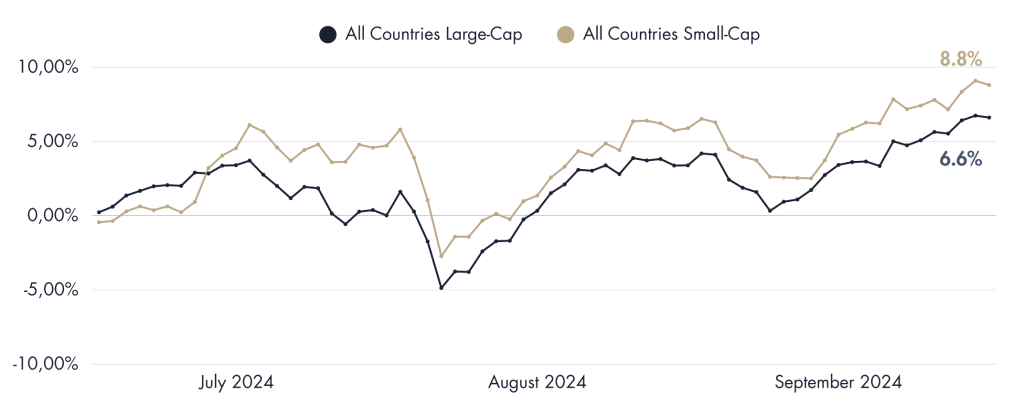
Source: MSCI. Data as at 30 September 2024.
In parallel, we have also seen a revival in the performance of equal-weighted indices. Unlike market-cap weighted indices, which are heavily influenced by the largest companies, equal-weighted indices offer a broader view of market performance. Over the past quarter, equal-weighted indices have outperformed their traditional counterparts, suggesting a more widespread rally across different sectors. This is a strong indicator that investors are moving beyond the market’s recent narrow leadership and seeking opportunities in sectors that were previously undervalued or overlooked. As central banks continue to lower rates, these underperforming sectors stand to benefit the most, as evidenced by the upward trajectory of the equal-weighted index in the graph below.
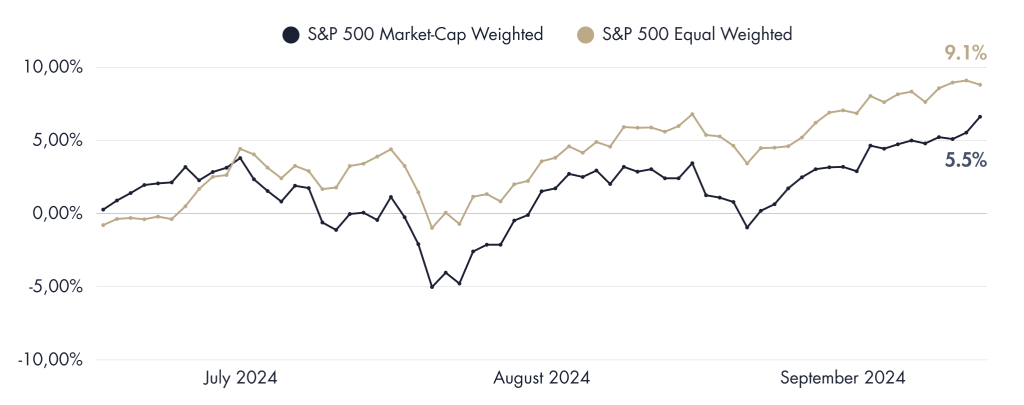
Source: Lipper. Data as at 30 September 2024.
RALLYING FOR RECOVERY: CHINA’S MARKET STIMULUS
A major development this past quarter was China’s surprise stimulus package, announced by its central bank in late September. This package had an immediate impact on the markets, with the MSCI China Index rising more than 20% in the last week of September (measured in USD). This sharp increase highlights how the central bank’s actions have reinvigorated investor confidence and catalysed market momentum.
The stimulus measures are designed to boost economic activity and restore China’s growth trajectory. Key actions include plans to cut the reserve requirement ratio by 50 basis points, a reduction in mortgage rates, and the rollout of a US$71 billion liquidity support fund for stocks. Additionally, the central bank introduced plans to lower the seven-day repo rate and reduce the down payment rate for second-home buyers from 25% to 15%. These moves are aimed at stabilising both the financial markets and the broader economy, providing a much-needed tailwind for various sectors that have been under pressure.
The strength of China’s stimulus response underscores the country’s commitment to hitting its growth targets, and as these policies take hold, Chinese equities are expected to benefit further. Investors should pay close attention to this shift as it could present attractive opportunities in the coming months, especially in sectors poised to capitalise on the renewed economic momentum.
FIXED INCOME REVIEW
It was an exceptional quarter for global fixed income markets, with the Bloomberg Global Aggregate Index rising nearly 7%, notably ,outperforming its equity counterpart, the ACWI. This strong showing was driven by the ongoing moderation in inflation, which allowed central banks globally to begin easing their monetary policies by cutting interest rates. During the quarter, the Federal Reserve lowered rates by 50 basis points, while the European Central Bank, the South African Reserve Bank, and the Bank of England each reduced rates by 25 basis points.
Treasuries outperformed high-yield bonds due to their greater sensitivity to interest rate changes. However, high-yield bonds did not lag significantly, thanks to the narrowing of credit spreads, driven by solid corporate performance. This helped deliver strong returns across the broader fixed income market.
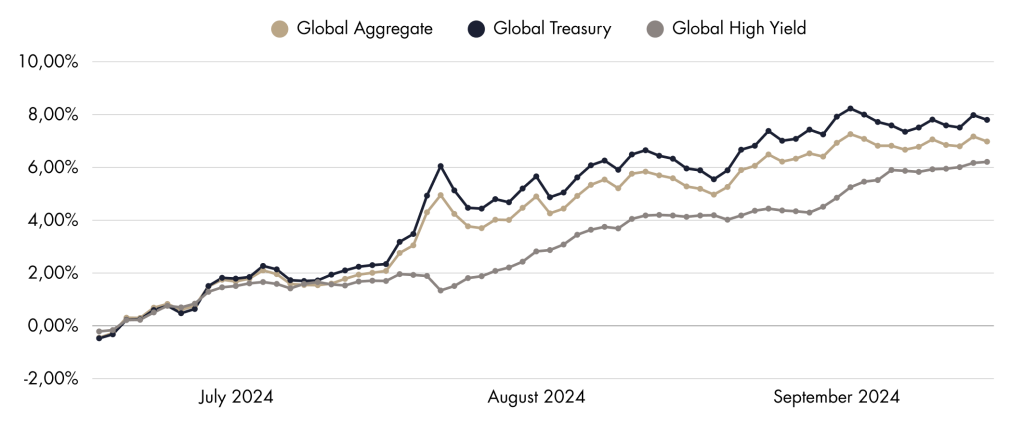
Source: Lipper. Data as at 30 September 2024.
FIXED INCOME ON THE RISE: A NEW ERA OF OPPORTUNITY
In our research article titled “Big on Bonds,” we previously included a table similar to the one below, but we’ve now updated it to focus on the performance of the US fixed-income market in the wake of interest rate cuts by the Federal Reserve. By analysing the last three significant periods of monetary policy easing in the US, it’s clear that we are in a favourable phase for fixed income. With central banks worldwide only beginning to lower rates recently, the stage is set for a potentially prosperous period for this asset class.

Source: Lipper. Federal Funds Rate Index, US Aggregate Index. Returns for periods greater than one year are annualised. Data as at 30 September 2024.
Historically, periods following rate cuts have often resulted in strong fixed-income returns, and the current environment appears to be no exception. As central banks shift towards more accommodative policies, fixed-income assets are positioned to benefit from reduced interest rates, lower borrowing costs, and increased demand for yield. This could result in not only short-term gains but also sustained long-term performance for bonds.
The potential for an annualised return exceeding 9% over the next three years is a compelling opportunity for investors. Recent strong quarterly returns in the fixed-income space are likely just the beginning of this positive trend, highlighting why fixed income deserves serious attention as part of a well-diversified portfolio. With the market dynamics aligning favourably, this asset class is well-poised for robust growth in the near future.
SOUTH AFRICAN FINANCIAL LANDSCAPE: SIGNS OF OPTIMISM AMIDST CHANGE
The moderation of South African inflation to below the Reserve Bank’s midpoint target of 4.4% has enabled a significant shift in the country’s monetary policy stance. In September, the South African Reserve Bank (SARB) decided to lower interest rates by 25 basis points, a move that is expected to stimulate economic activity. This change is illustrated in the South African Government Bond Yield Curve below, which shows a downward shift in rates across various maturities, indicating a more accommodative environment for borrowing and investment.
This lower interest rate environment holds promise for the South African economy, as it could provide much-needed support for growth in the next market cycle. By easing borrowing costs, businesses may be encouraged to invest in expansion and capital projects, while consumers may benefit from lower repayments on loans and mortgages.
The optimism surrounding this policy shift has already been reflected in South African equities, which have seen positive momentum, partly driven by a rally in Chinese markets. Similarly, the local real estate sector has enjoyed a stellar performance this year, benefiting from the improving economic outlook and increased investor confidence.
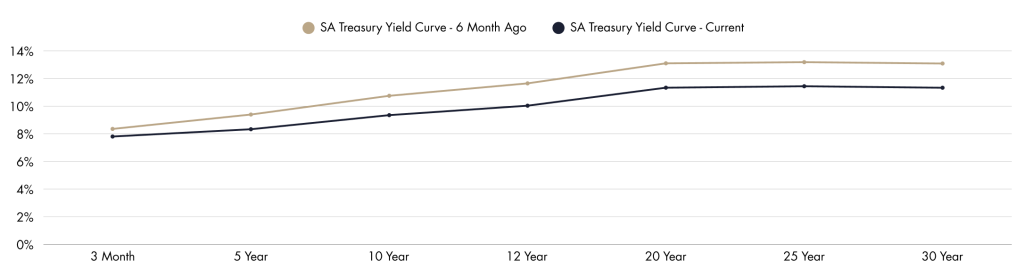
Source: World Government Bonds. Data as at 30 September 2024.
REAL ESTATE REVIEW
The third quarter of 2024 proved to be a remarkable period for both local and global real estate markets. This strong performance is something we at Bellamont have been patiently anticipating, as real estate—an asset class that has been under pressure for some time—finally has a reason to shine.
As mentioned earlier in our quarterly report, the macroeconomic environment has turned decidedly favourable for real estate. Inflation, both locally and globally, has largely moderated, paving the way for a shift to lower interest rates. This has provided a much-needed boost to the sector, as reduced borrowing costs have made property investments more attractive and accessible to both buyers and investors.
Moreover, real estate companies have delivered solid financial results over the quarter, further breathing life into the asset class. Improved earnings, stabilised rental incomes, and rising property values have all contributed to renewed confidence among investors. These positive factors, alongside increased capital inflows, have fuelled the market’s momentum.
This quarter’s performance represents a culmination of these favourable developments. After a prolonged period of being overlooked, real estate has finally emerged as a bright spot, delivering exceptional returns. This potentially marks the beginning of a more prosperous period for the asset class, and we are excited about the opportunities that lie ahead.
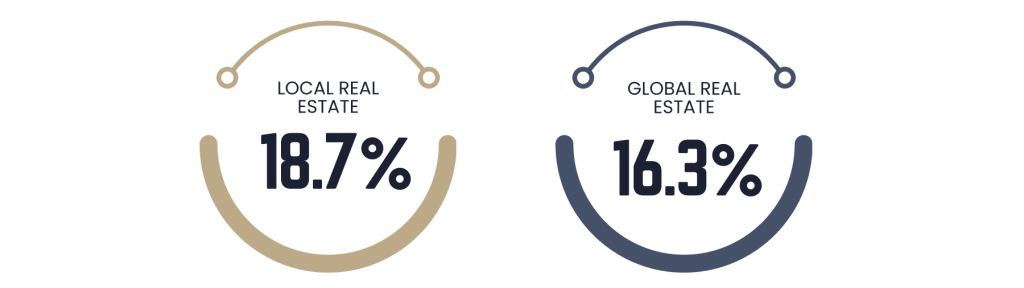 Source: Lipper. Data as at 30 September 2024.
CURRENCY REVIEW
During the third quarter of 2024, the South African Rand demonstrated relative stability against the Euro, appreciating by 0.68% and experienced a slight decline of 1.3% against the British Pound. The most notable movement during this period was against the US Dollar, where the Rand made significant gains.
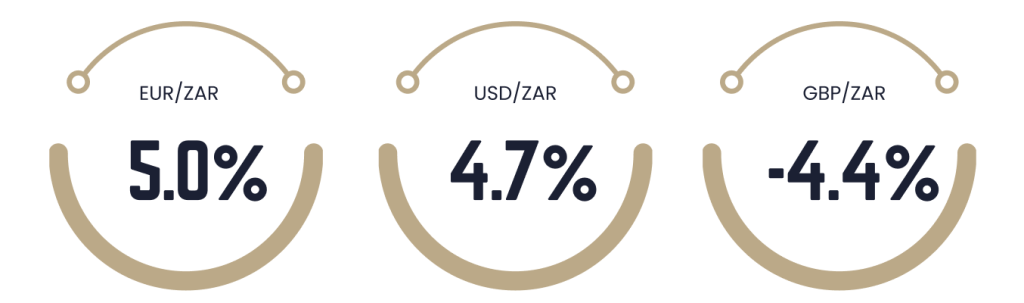
Source: Lipper. Data as at 30 September 2024.
As highlighted in our previous two quarterly reports, the US Dollar had reached near all-time highs against major currencies, driven by robust economic indicators and aggressive monetary policy. However, the 50 basis point rate cut implemented by the Federal Reserve during this quarter provided a welcome shift in the landscape.
The Dollar’s moderation following the Fed’s rate cut was instrumental in the Rand’s recovery. Investors responded positively to the shift, which led to capital inflows into emerging markets, including South Africa.
GLOSSARY & DISCLOSURES
Equity
USA – Represented by the the MSCI USA Index which is designed to measure the performance of the large and mid cap segments of the US market, with 610 constituents. South Africa – Represented by the MSCI South Africa Index which is designed to measure the performance of the large and mid cap segments of the South African market, with 32 constituents. All Countries – Represented by the MSCI All Country World Index which captures large and mid cap representation across 23 Developed Markets and 24 Emerging Markets countries, with 2,920 constituents. Emerging Markets – Represented by the MSCI Emerging Markets Index which captures large and mid cap representation across 24 Emerging Markets countries, with 1,440 constituents. Europe – Represented by the MSCI Europe Index captures large and mid cap representation across 15 Developed Markets countries in Europe, with 421 constituents.
Fixed Income
Global Aggregate – Represented by the Bloomberg Global Aggregate Index which measures the performance of global investment grade debt from twenty-eight local currency markets. This multi-currency benchmark includes treasury, government-related, corporate and securitized fixed-rate bonds from both developed and emerging markets issuers. Global Treasury – Represented by the Bloomberg Global Aggregate Index which measures fixed-rate, local currency government debt of investment grade countries, including both developed and emerging markets. The index represents the treasury sector of the Global Aggregate Index. Global High Yield – Represented by the Bloomberg Global High Yield Index measures the performance of the global high yield debt market.
Real Estate
Local – Represented by the JSE All Property Index which measures the performance of the South African listed property sector. Global – represented by the FTSE EPRA/NAREIT Developed Index which measures the performance of eligible real estate equities worldwide.
All returns are cumulative and measured in United State Dollars apart from the JSE Local Property which is measured in South African Rand. Information in this document regarding market or economic trends, or the factors influencing historical or future performance, reflects the opinions of management as of the date of this document. These statements should not be relied upon for any other purpose. Past performance is no guarantee of future results, and there is no guarantee that the market forecasts discussed will be realised.
