



The third quarter of 2025 was a constructive period for investors. Global equity markets rallied as disinflation continued to make gradual progress and investors increasingly priced a pivot in monetary policy. In the background, persistent structural themes most notably AI and digital infrastructure investment continued to concentrate returns among a narrow set of market leaders even as market breadth improved. At the same time, fixed income benefitted from lower short-term yields and tighter credit spreads, while select real assets staged a measured recovery as funding conditions eased.
The macro backdrop evolved meaningfully through the quarter. Inflationary pressures moderated across major developed economies, allowing central banks to adopt a more balanced tone and creating market expectations for rate cuts over the coming year. The Federal Reserve’s September announcement confirmed the first policy easing of the year a move markets interpreted as signalling a shift from “higher for longer” to a gradual easing cycle. That pivot materially changed discount-rate assumptions and underpinned risk taking across equities and credit.
Equity Commentary
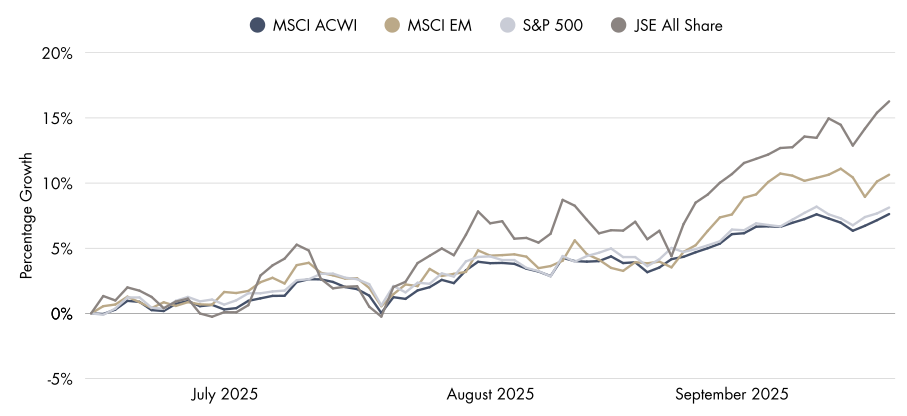
Global equities delivered a strong quarter, with the MSCI ACWI gaining 7.62% and the S&P 500 advancing 8.12%. Investor confidence strengthened as corporate earnings proved resilient and the outlook for policy rates improved. Growth leadership remained anchored in technology and AI exposed companies, which continued to benefit from heavy investment in cloud computing, semiconductors and enterprise software.
At the same time, Chinese stimulus measures particularly renewed fiscal support and infrastructure investment helped to stabilise growth expectations across Asia and lifted risk sentiment toward emerging markets. The MSCI Emerging Markets Index rose 10.64%, aided by a softer US Dollar and improving capital inflows.
Importantly, the rally also showed tentative signs of broadening beyond the large-cap leaders, with small-cap equities gaining 8.1% during the quarter and outperforming the broader MSCI All Countries Index. While market concentration remains elevated, the improved participation across size segments hints at a healthier underlying market dynamic.
Source: Lipper. Data as 30 September 2025.
Fixed Income Commentary
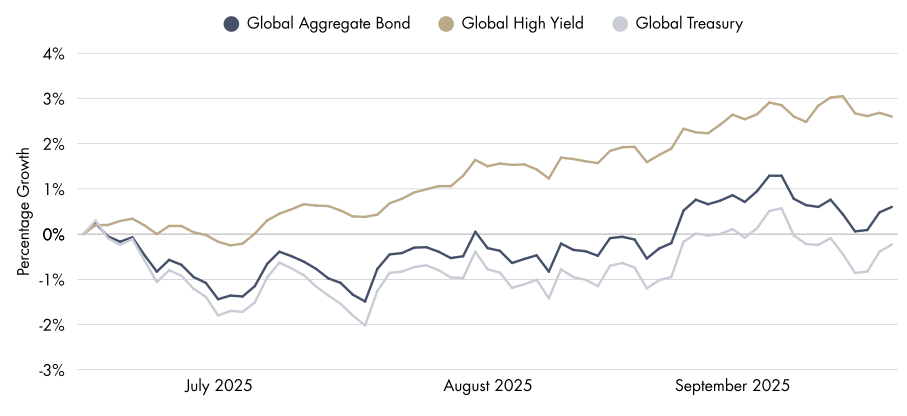
Fixed income markets delivered modest but constructive gains as yields adjusted to the shifting policy narrative. The Bloomberg Global Aggregate Index rose 0.6%, while Global High Yield outperformed with a 2.6% return, supported by tighter credit spreads and improving risk appetite. The Global Treasury Index, however, declined 0.23%, reflecting longer term yield pressures tied to fiscal financing needs and shifting term premiums.
Short dated sovereign yields fell the most as markets front ran expected central bank easing, while longer dated maturities remained more volatile. Credit investors benefited from both carry and modest spread tightening, particularly in higher quality corporate debt, as default rates stayed low and liquidity improved.
Source: Lipper. Data as at 30 September 2025.
Real Estate Commentary
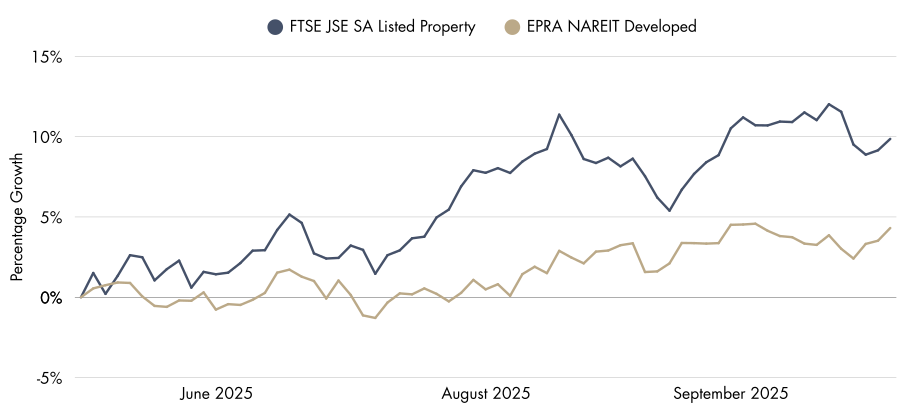
Real estate and infrastructure assets stabilised meaningfully in the third quarter of 2025. The FTSE EPRA Nareit Developed Index rose 4.31%, reflecting yield compression and a rebound in investor appetite for income-producing assets. Sub sectors tied to secular demand logistics, data centres, and energy infrastructure outperformed amid ongoing structural tailwinds from e-commerce, cloud adoption, and the energy transition.
Easing financing conditions and falling bond yields supported a quarter of recovery in listed property after some challenging periods in recent memory.
Source: Lipper. Data as 30 September 2025.
South Africa Commentary
South Africa participated in the global rerating, with the FTSE/JSE All Share Index surging over the quarter one of the strongest major market performances globally. Gains were heavily driven by the resource complex and dual listed technology holdings Prosus and Naspers, both of which rebounded on improved sentiment toward China and higher commodity prices. This resource led expansion, however, masked continued weakness among domestically oriented “SA Inc.” sectors, where muted earnings growth still reflects South Africa’s fragile economic backdrop.
The FTSE/JSE SA Listed Property Index delivered an impressive return, aided by easing local yields and renewed foreign inflows into emerging-market assets. Domestic bonds also performed well as investors sought attractive real yields, while the Rand firmed modestly against the US Dollar through the period. Nonetheless, structural headwinds remain: fiscal consolidation, electricity reliability, and policy reform remain critical to sustaining investor confidence and ensuring longer term market stability.
Key Drivers of the Quarter
Several themes defined the third quarter’s market behaviour –
- Easing Inflation: Credible evidence of moderating inflation across the US and Europe lowered discount rates for longer duration assets;
- AI and Digital Infrastructure: Continued heavy investment in AI ecosystems concentrated returns among leading technology firms, while expanding the broader market’s capitalisation;
- China’s Stimulus and a Softer Dollar: Renewed Chinese fiscal support and infrastructure measures boosted global risk sentiment and drove flows into emerging market equities and debt;
- Stronger Credit Fundamentals: Low default rates and improved balance sheets encouraged spread tightening and supported high yield performance; and
- Event-Driven Volatility: Geopolitical tensions and tariff rhetoric caused intermittent market pullbacks, though these were generally short lived against the quarter’s upward trend.
Outlook
As we move into the final quarter of 2025, Bellamont is monitoring several cross cutting risks.
- Monetary Policy Credibility: The Federal Reserve’s September easing confirmed a policy shift, but the path and pace of future cuts remain uncertain. If markets have priced in a faster or deeper easing cycle than policymakers ultimately deliver, risk assets could retrace;
- Inflation Path: While headline inflation has moderated, services inflation remains stubbornly high, and energy prices though stable through much of the third quarter retain the potential to reintroduce volatility. Persistent price pressures in these areas could unsettle the prevailing disinflation narrative;
- Economic Growth Uncertainty: Global GDP growth remains subdued, and cracks are beginning to appear in labour markets, signalling that underlying momentum is softening. Policymakers are walking a tightrope seeking to support growth without reigniting inflation at a time when geopolitical and trade uncertainty make clarity and consistency more vital, yet more difficult to achieve; and
- Geopolitical and Trade Shocks: Elevated geopolitical tensions and renewed trade rhetoric continue to pose risks to sentiment and capital flows, with the potential to quickly reverse investor optimism.
Within South Africa, sustaining foreign inflows will depend on credible fiscal progress, continued electricity stabilisation, and improved business confidence.
Bellamont remains steadfast in its philosophy of selectivity and consistency. Applying a disciplined approach across market cycles has always been central to our process and perhaps now feels more important than ever. In a year marked by volatility and increasing concentration of returns among a handful of investments, maintaining confidence in one’s holdings and a clear philosophy remains the most reliable path to lasting results.
Closing Thoughts
The third quarter of 2025 reaffirmed that markets are ultimately driven by expectations, and when policy and earnings narratives align, moves can be swift and broad. For investors, the lesson is timeless: stay disciplined, remain selective, and hold conviction in quality. These are the values that continue to guide Bellamont as the year draws to a close.
Glossary & Disclosures
Equity
United States – Is represented by the S&P 500 which is an equity market index that measures the share price performance of the 500 largest companies in the United States. South Africa – Is represented by the JSE All Share – The All Share Index represents 99% of the value of all eligible securities listed on the Main Board of the Johannesburg Stock Exchange. Aims to represent the performance of the South African equity market. All Countries – Is represented by the MSCI All Country World Index – Captures large and mid cap representation across 23 Developed Markets and 24 Emerging Markets countries. With 2,920 constituents, the index covers approximately 85% of the global investable equity opportunity set. Emerging Markets – Is represented by the MSCI Emerging Markets Index – Captures large and mid cap representation across 24 Emerging Markets countries. With 1,440 constituents, the index covers approximately 85% of the free float-adjusted market capitalization in each country. Developed Markets – Is represented by the MSCI World Index – The MSCI World Index captures large and mid-cap representation across 23 Developed Markets (DM) countries. With 1,395 constituents, the index covers approximately 85% of the free float-adjusted market capitalization in each country.
Fixed Income
Global Aggregate – Represented by the Bloomberg Global Aggregate Index which measures the performance of global investment grade debt from twenty-eight local currency markets. This multi-currency benchmark includes treasury, government-related, corporate and securitized fixed-rate bonds from both developed and emerging markets issuers. Global Treasury – Represented by the Bloomberg Global Aggregate Index which measures fixed-rate, local currency government debt of investment grade countries, including both developed and emerging markets. The index represents the treasury sector of the Global Aggregate Index. Global High Yield – Represented by the Bloomberg Global High Yield Index measures the performance of the global high yield debt market.
Real Estate
Local – Represented by the JSE All Property Index which measures the performance of the South African listed property sector. Global – represented by the FTSE EPRA/NAREIT Developed Index which measures the performance of eligible real estate equities worldwide.
All returns are cumulative and measured in United State Dollars. Information in this document regarding market or economic trends, or the factors influencing historical or future performance, reflects the opinions of management as of the date of this document. These statements should not be relied upon for any other purpose. Past performance is no guarantee of future results, and there is no guarantee that the market forecasts discussed will be realised.
